
The views get better and better as you follow the Pembrokeshire Coast Path round to Dale.
| Distance: | 11.0 Miles | |
| Est. Time: | 4 hrs 50 mins | |
| Difficulty: | Easy | |
| OS map: | Explorer sheet OL36 | |
| Total Ascent: | 755 ft | |
| Total Descent: | 719 ft | |
Register to create & share your own walks
Highlights
- clifftop walks with superb seascapes
- spectacular bays and beaches
- wild flowers, rare birds, peace
This is the start of a beautiful walk but, admittedly, the first couple of miles are dull. Never mind, there's much better to come.
The Route 
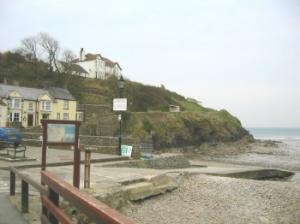 Follow the road direct from Broad Haven, over the hill to Little Haven (about 1 mile).
Walk down to the harbour/cove then past the Post Office and St Brides Inn and up the hill out of the village (this road becomes Strawberry Hill). At the fork (right to Dale 6m) go straight ahead past the caravan park. Go past Howelston (farm) to North Leys where the road sweeps right and comes to a T-junction. Turn left towards Hasguard Cross.
 Cross the B4327 and continue down to the T-junction near Chapel House. Turn left and walk round the road past the Baptist Chapel and up a steep hill near Sandyhill Cottages. Take the next left towards Sandy Haven.
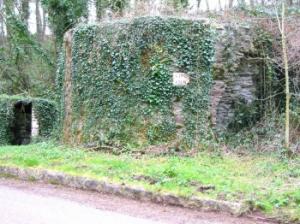
At the lime kiln turn left and, after 100 yards, turn right over a stile and up through woodland to join the Coast Path proper.
Cross several stiles and a couple of small streams. (Ignore the small stile that crosses a wire fence on the left). Continue straight ahead, following the yellow arrow, to the next stile (where the chimneys of Milford Haven come into view). Pass the base of a signal tower and continue around the cliff path, crossing a stream. Beside a cottage and a radar tower turn right onto a gravel track. After 100 yards turn left to resume the Coast path.
Pass a path that leads off to the right (for St Ishmaels) and continue straight ahead. Cross 3 stiles (avoid the path on the left after the 3rd stile) and continue ahead. Cross another 3 stiles then walk in front of some old lookout buildings/former coastal defences.
 At the ruined Watch Tower that gives this bay its name (Watch
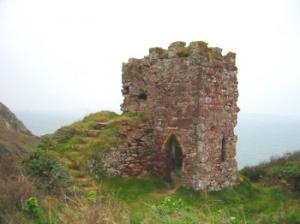 House Bay) cross another stile and walk round the headland and down a curving path leading to the wooded river valley of Monk Haven. Cross a wooden bridge and pass another footpath (goes right to Monks Haven car park).
Go steeply up to resume the cliff path. Cross a stile, a lane, then another stile. Cross two more stiles behind farm buildings and look out to the bay to take note of the tide. If the tide is high you will need to walk up the path to the right and follow the alternative path via Whiteholmes Farm, Mullock and Mullock Bridge.
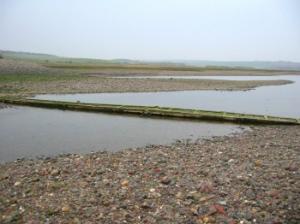
If the tide is low on the Gann Estuary you can turn left to walk to the foreshore. Walk along the beach for about half a mile to a low wooden footbridge/boardwalk (usable two hours either side of low tide). Cross the bridge and the grassy causeway (Pickleridge) to a lay-by/viewpoint on the B4327. Turn left onto the road and follow it round into Dale.
Safety
Nowhere is this a particularly difficult walk, but walkers may choose to take it steadily over 4 days or step out for the 3 day version. The overall distance is 33 1/2 miles made up of -
Broad Haven - Dale - 10 miles
Dale circular walk - 7 miles
Dale to Marloes - 7 1/2 miles
Marloes to Broad Haven - 9 miles
Notes
Broad Haven - a coastal holiday village with two good pub/restaurants and several shops. A broad sandy beach bounded by cliffs and looking out across St Brides Bay.
Dale - a small village, but the largest community in this peninsula and the focus of much of the local activity and organisation. It is situated at the head of quite a large inlet, bounded by cliffs, and is a centre for local boating/sailing/windsurfing activity. Its great moment in history was the arrival in 1485 of 55 ships bearing the army, which was to defeat Richard III at Bosworth and put Henry Tudor on the throne of England.
Little Haven - a small, picturesque harbour and village situated at the southern end of St Bride's Bay. Little Haven has several pubs and restaurants and a public car park.

