
The sights you pass on this route are worthy attractions in their own right - but there's beauty to enjoy on the way.
| Distance: | 8.1 Miles | |
| Est. Time: | 4 hrs 20 mins | |
| Difficulty: | Easy | |
| OS map: | Explorer sheet OL9 | |
| Total Ascent: | 2021 ft | |
| Total Descent: | 2021 ft | |
Register to create & share your own walks
Highlights
- dramatic sea and cliff views
- Valley of the Rocks
- Watersmeet
- Lynmouth sea front
- East & West Lyn Rivers
Lynton and Lynmouth are popular tourist venues set on the edge of Exmoor's stunning scenery and wildlife habitats. This walk takes in both resorts and a good selection of the range of scenery that this area offers.
The Route 
From the Valley of the Rocks Car Park cross the road to a footpath signposted "Lynton & Lynmouth via Hollerday Hill". Path leads over the hill and down to join Coast Path. Turn left and continue to Castle Rock where the path rejoins the road.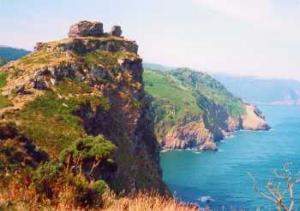
Follow road for 150 yards then turn right onto Coast Path, which later loops back up from cliff to rejoin road at Toll House. Follow Toll Road to Lee Abbey retreat centre then, as the road bends right at the end of Lee Abbey, cross the road and go through gate to take track uphill towards woods. A short way through the woods the path forks - take the steeper left-hand path uphill.
The path curves sharply left and uphill (somewhat overgrown). Go through gate at top of hill and turn right onto cross path. After 400 yards go through gates past farm buildings (Six Acre Farm) and continue to a small road (marked as Bridleway). Pass through gate close to Caravan/Camp site and turn left onto road. Continue approx 250 yards and take right fork towards Dean and Lynton (signposted 2m) In the tiny hamlet of Dean there is a large open tarmac area (formerly the station car park). Continue along this road then turn left on the A39. Follow the main road down into Barbrook, where fork left onto the B3234 towards Lynton. A small paved enclosure features a roadside memorial to 2 young Australians who were killed in the 1952 disaster.
Where the B3234 forks left to Lynton take the right fork down the steep hill towards Lynmouth. At Lynbridge cross the West Lyn river by means of the footbridge behind Ye Olde Cottage Inn. This takes you into the National Trust Watersmeet estate.
Turn left on path towards Watersmeet (signposted Watersmeet via Summerhouse Hill and Cleaves 2 ½ m). The path zigzags up the hillside until it reaches a viewpoint overlooking Lynmouth. You are now following the Two Moors Way long distance footpath..
Where the path branches right (to West Lyn) continue straight ahead to Watersmeet. At the Summer House Hill sign continue straight ahead (ignoring two successive signs to Lynmouth). Go down zigzags, cross stream, then up zigzags to The Cleaves. 'T' into another footpath then go left through a gate towards Hillsford Bridge (Myrtlebury Cleave). Take the left fork towards Watersmeet (not Hillsford Bridge). You are now leaving the Two Moors Way.
Go down steps (ignoring the path to the right) and continue straight down. Notice the mounds of Myrtle Berry North Camp (remnants of an Iron Age site). Another path comes in from the right. Continue down through the woods to the road (A39). Cross the road and go down the footpath opposite (behind the Watersmeet staff car park). The confluence of two rivers at the foot of the hill inspied the name Watersmeet. Cross two footbridges to the National Trust shop and café. Linger awhile for refreshments and enjoy the scene.
Follow the path downstream on the Visitor Centre side of the river. The main path goes uphill but there is a small diversionary alongside the river past a small waterfall. When the Countisbury path branches off right continue straight ahead on the path towards Lynmouth (1 ½ miles). Cross the river as you approach Lynmouth then walk into town and along the front as far as the Cliff Railway. The footpath to Lynton and the Valley of the Rocks begins just after the Visitor Centre and just before the entrance to the Cliff Railway. It is a well-laid tarmac path but very steep and relentless. It crosses the Cliff Railway several times giving you a good chance to see the trains in action.
As the path comes out onto a small road turn right and continue ahead (past the North Cliff Hotel) to rejoin the Coast Path towards the Valley of the Rocks.
Retrace the route left, up the cliff and over the ridge back to the car park.
Safety
This walk is pretty safe, although care is needed where the route follows main roads. It includes several steep climbs - the steepest of which is the metalled footpath leading up from Lynmouth to Lynton close to the end of the walk. Total distance approximately 12 miles.
Notes
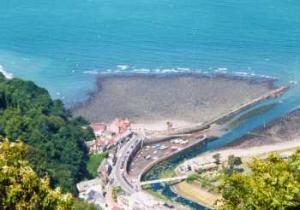 Lynmouth has been a popular resort since the coming of the railways, when most visitors reached it via Lynton and the Cliff Railway. Its most famous event of the 20th century was a tragic August night in 1952 when an Exmoor storm turned the combined force of the East and West Lynn rivers into a raging flash flood that swept much of the town away and killed many residents and holidaymakers. Today it is peaceful, pretty and popular and the Cliff Railway still attracts visitors.
Lynton overlooks Lynmouth and shares its modern prosperity. Unlike Lynmouth, which is trapped between sea front and cliff, Lynton has space for car parks, shops and hotels and is the preferred arrival and departure point for many visitors.
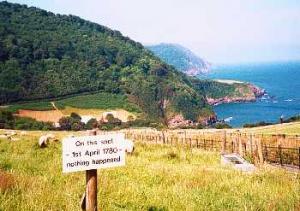
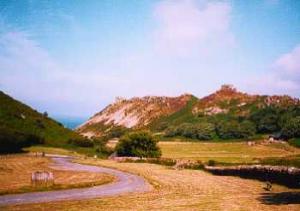
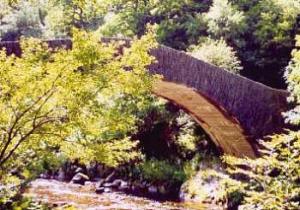 Valley of Rocks is a small vale, just outside Lynton, that is kept back from the cliff edge by a protective wall of rocky hills. A pretty location in itself, it is also a pleasant place to begin a walk along the cliff path (or the longer route recommended by this guide).
Lee Abbey is a Church of England Retreat Centre consisting of stone buildings set in pleasant grounds with well-tended gardens providing stunning cliff and sea views.
Myrtle Berry North Camp now consists of an unimpressive group of mounds set among small trees and heathland buses. But is is the remnant of an Iron Age camp - deserving at least a brief inspection and homage to its historical significance.
Watersmeet is owned and managed by the National Trust and justifiably attracts large numbers of visitors in the summer. Many park their alongside the road and stop long enough only to walk down the path, cross the rivers and walk straight back again. A longer visit will reward you with delightful river and woodland scenes plus a wide range of birdlife, including Dippers and Tree Creepers.

